Dermatitis
Contact Dermatitis
Contact dermatitis occurs mostly in two forms: allergic contact dermatitis and irritant contact dermatitis. These conditions are all related to items that encounter your skin from outside exposure source. These are not related to ingesting certain foods or having seasonal allergies.
Allergic contact dermatitis is related to allergens that you may come into contact with that your body tolerate well, and causes it to respond with an immunologic reaction as the bodys way of ridding the antagonist. It typically presents with blistering, but also may be as subtle as a dry skin rash.
Irritant contact dermatitis is created from exposure to products that create an irritation to the skin, such as chemicals. Anyone with enough exposure to these products will typically form a rash. It typically presents as inflamed, dry, rough and cracked skin, but can also be as distinct as bright red patches to the more severe chemicals.
The most commonly used treatment for both conditions is to eliminate the causative agent, which can often times eliminate the condition. Skin testing for allergens can be performed for the more difficult cases. Topical and oral medicines are the most common forms of treatment.
Hand Dermatitis
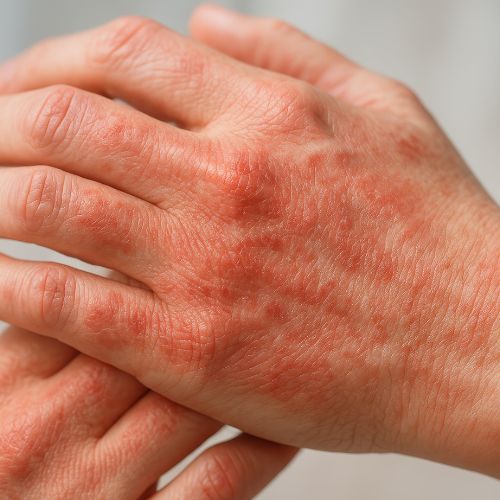
Hand dermatitis, or hand eczema, is an inflammatory skin condition affecting the hands, causing symptoms like dryness, redness, itching, cracking, and blistering.
It is triggered by various factors, including irritants, allergens, genetics, and excessive washing, and can be acute or chronic.
The condition is not contagious, but its symptoms can significantly impact daily life and professional activities

Rhode Island's Preferred Choice
Why Choose Us?

Inclusive Care
Our team is fluent in English, Spanish, Portuguese, and Laotian. We gladly serve everyone from infants to senior citizens.

Urgent Appointments
Time is essential when facing an emergency, so call us today for an appointment. You will never have to wait for an urgent appointment.

Caring Staff
Our compassionate team provides personalized attention and support throughout your treatment journey.

Convenient Location
Easily accessible location in the heart of Rhode Island with ample parking and flexible scheduling.

Latest Technology
State-of-the-art equipment and cutting-edge treatments for optimal results and patient comfort.

Patient Satisfaction
Consistently high patient satisfaction scores and positive outcomes across all our services.
Schedule an
Appointment Today!

Testimonials
What Our Patients Say
Donna
Dr Shane is always thorough and professional. I’ve been coming here for many years with always a positive experience.His staff is friendly, compassionate and professional. I never have to wait long at my appointments.

Alan
From the receptionist to the dermatologist, all were/are helpful and professional.
Carla
Kind professional services provided in a timely manner. I sppreciate Taylor always gives me options and values my input.